Running a small business is a lot like spinning plates. There’s always another one wobbling, another one demanding attention, and somewhere in the back, one is quietly about to crash.
For a lot of business owners, that crashing plate is their CRM, or worse, the total lack of one.
The thing is, most people don’t even notice the damage until it’s already done. So if the question of signs it’s time for a new crm has been quietly nagging in the back of the mind, it might be worth paying attention to that little voice.
A CRM (or Customer Relationship Management) system, is basically the nerve center of how a business communicates with its customers.
It tracks who’s who, what they’ve bought, when they last reached out, and a whole lot more.
When it’s working well, it’s invisible…like a good engine under the hood.
But when it’s not? Everything starts to grind.
Here are four signs that the current setup has officially become a problem.
The Data Is a Mess and Nobody Knows What’s Going On
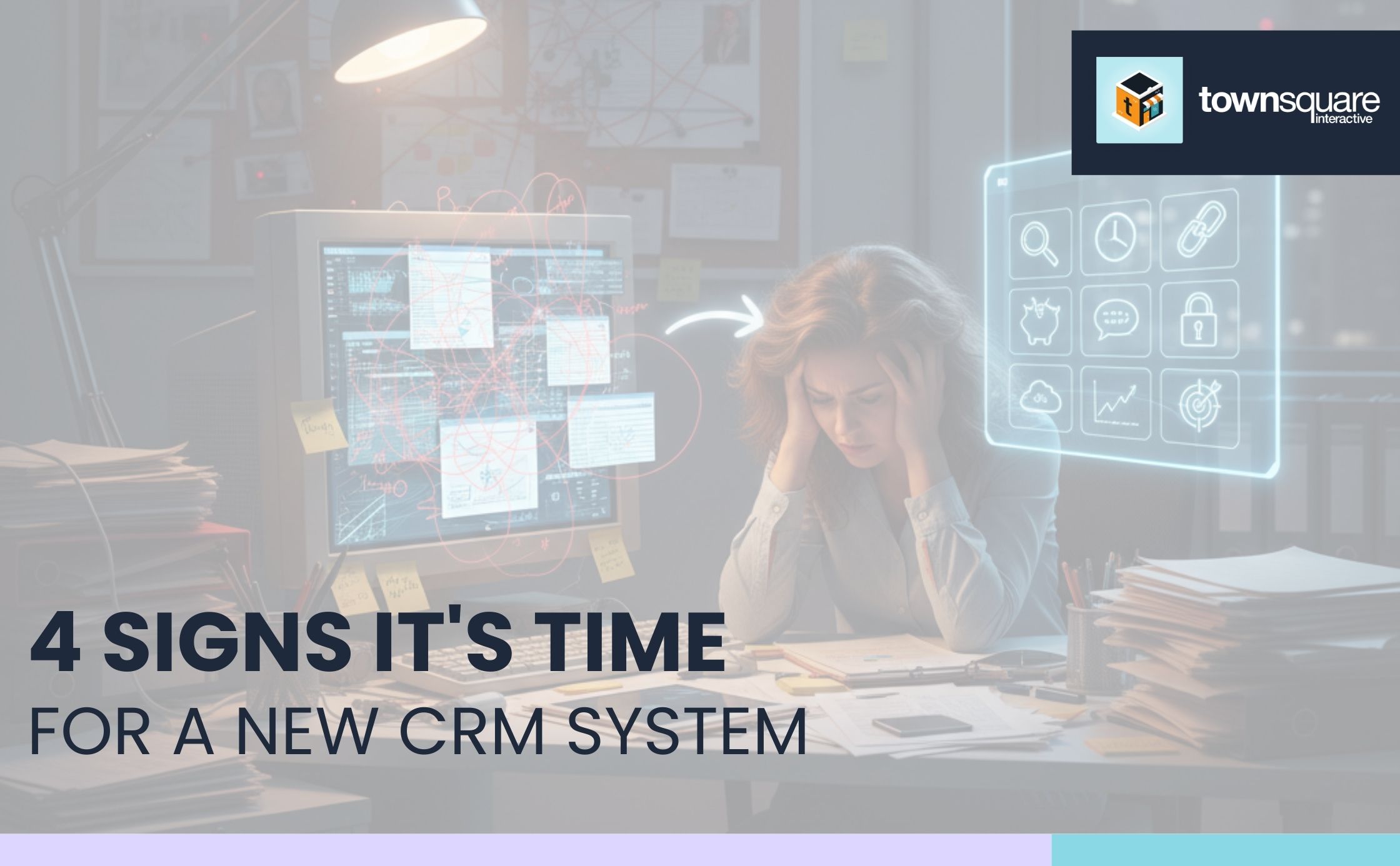
There’s a good chance that right now, somewhere in the business, customer information lives in three different spreadsheets, two email inboxes, a sticky note on someone’s monitor, and maybe a half-remembered conversation from last Tuesday.
Sound familiar? That’s not a system. That’s a treasure hunt nobody signed up for.
When customer data isn’t centralized, things fall through the cracks. Follow-ups get forgotten. Important details get lost.
And the customer on the other end? They end up repeating themselves every single time they call, which is one of the fastest ways to lose trust in a business.
A solid CRM brings all of that scattered information into one place: one clean, organized home base where anyone on the team can pick up right where someone else left off.
So long story short, f the current setup can’t do that, it’s not really doing its job.
The Team Is Spending Too Much Time on Busywork
Here’s a hard truth for small business owners: time is the one resource that never comes back.
And if hours are disappearing every single day into tasks like manually entering data, sending the same follow-up emails over and over, or trying to remember which leads need a nudge…then yeah, that’s not a people problem. That’s a tool problem.
Modern CRM systems come equipped with automation features that handle the repetitive stuff so the team can focus on what actually moves the needle, like building relationships, closing deals, and growing the business.
If the current system doesn’t offer that kind of automation, or if it’s so clunky that nobody actually uses it, that’s a pretty clear sign that updating the crm system should jump to the top of the to-do list.
The right CRM doesn’t just store information. It works in the background by keeping things moving without anyone having to babysit every step of the process.
Customer Communication Feels Like It’s Slipping Through the Cracks
Nothing says “we don’t care about your business” quite like a customer having to explain their situation from scratch every time they reach out. It’s frustrating on their end, and it’s a red flag on the business end.
Good customer communication isn’t just about being friendly, even though that’s important. Much more than that, it’s about being consistent, informed, and responsive.
Think about it just for a moment. Would you rather work with customer service yourself that’s friendly or both friendly and helpful? Exactly.
A CRM that’s working well makes all of that possible. It pulls up a customer’s history in seconds, flags important details, and helps the team respond in a way that actually makes the customer feel like they matter.
If the current system (or the absence of one) is making it hard to keep up with customer interactions, that’s the business leaving money on the table.
Customers who feel heard and valued stick around. Customers who feel forgotten don’t.
Growth Is Starting to Feel Impossible
Every small business hits a point where the tools that worked at the beginning start to feel like they’re holding things back.
Maybe the business outgrew a basic spreadsheet. Or maybe the CRM that seemed fine six months ago suddenly can’t keep up with the volume of leads as well as all of the existing customers and all of the new conversations that are coming in.
That feeling (as in that sense of hitting a wall) is one of the clearest signs its time for new crm thinking. Growth is supposed to feel exciting, not exhausting.
And if the current system is making scaling up feel like climbing a hill with cement shoes, something has to change!
The right CRM grows with the business. It doesn’t max out when things start picking up. It scales, adapts, and keeps everything running smoothly even as the customer base gets bigger and the workflow gets more complex.
So What Does the Right CRM Actually Look Like?
Knowing it’s time to switch crm is only half the battle. The other half is finding one that actually fits the way small businesses operate and without the enterprise-sized price tag or the learning curve that comes with it.
Here’s what to look for: an all-in-one platform that handles customer management, marketing automation, communication, and reporting without requiring a team of IT specialists to run it.
Something that plays nice with the tools already in use. Something that comes with real human support (not a chatbot and a help article nobody asked for!).
That’s exactly the kind of setup Townsquare Interactive’s Business Management Platform was built to deliver. It’s designed from the ground up for small business owners who need a smart and more streamlined way to manage customers, as well as to automate their marketing, communicate with leads, and track how the business is actually doing…all in one place.
No contracts. No runaround. Just a dedicated specialist who gets to know the business and helps make the most of every feature.
The Bottom Line
If your current system is creating more headaches than it’s solving, it’s not worth holding onto out of habit or fear of change.
The right platform should make things easier, and not harder. It really is as simple as that.
Small businesses deserve tools that work as hard as they do.
And if the current setup isn’t cutting it, well, there’s really no better time than now to make the switch.