Two contractors walk into the same market.
One signs up for Angi, HomeAdvisor, or Thumbtack. Leads start coming in. The phone rings. Jobs get booked. It feels like the problem is solved.
The other sets up a CRM, builds out their customer list, automates their follow-up, and starts working on their Google presence.
Six months later, the first contractor is still paying for every lead. The second one has leads coming in on their own, plus repeat business from people who already trust them.
Which one would you rather be?
This post breaks down the real difference between buying leads and building a CRM, so you can make the decision that actually grows your contracting business long term.
First, Let's Define Both
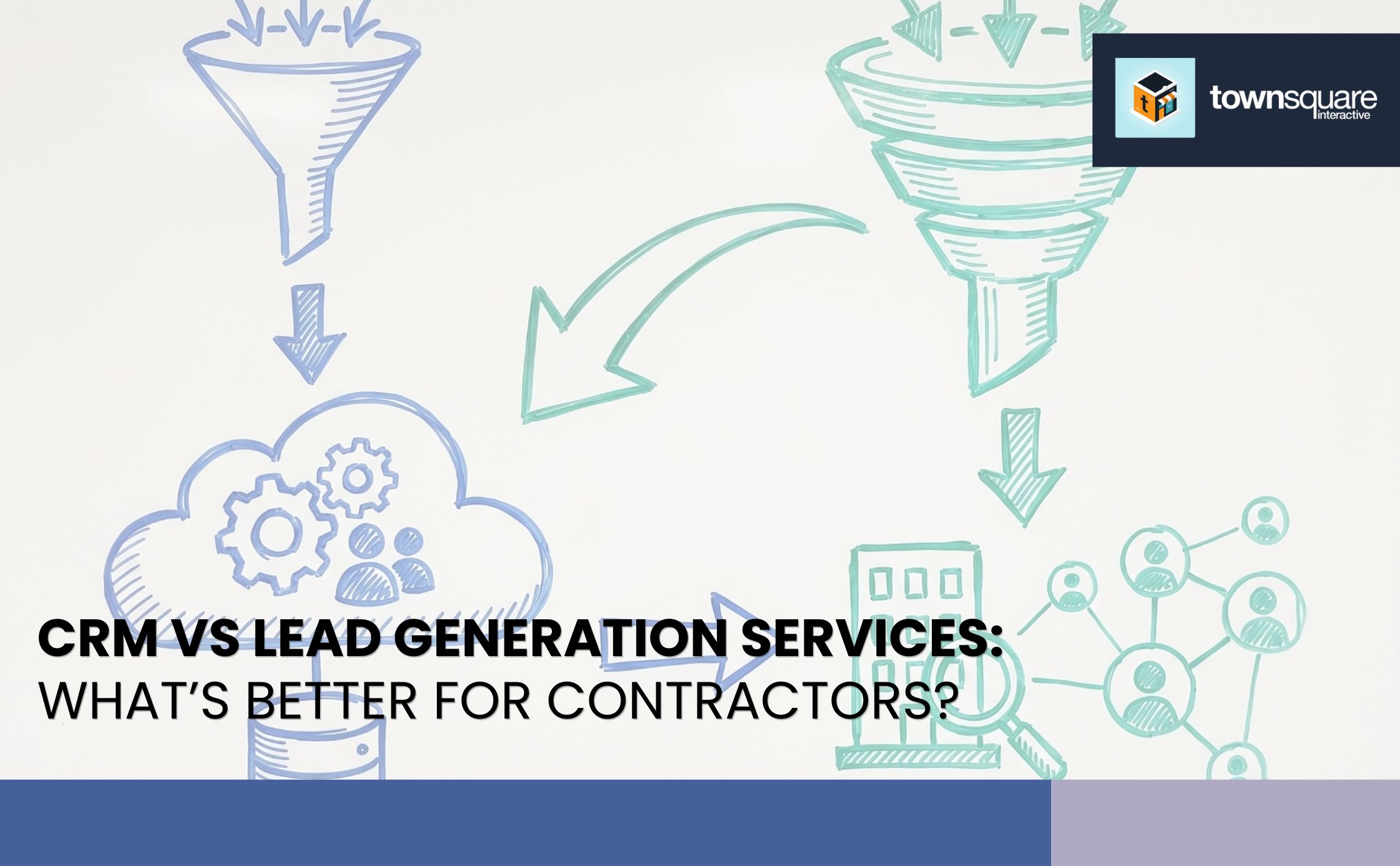
A lead generation service is a company that finds potential customers for you and sells you their contact info. You pay per lead, per month, or both. Angi, HomeAdvisor, Thumbtack, and similar platforms work this way. You get a name and a number. You call. You try to beat out the three other contractors who got the same lead.
A CRM, which stands for Customer Relationship Management software, is something completely different. It doesn't find new customers. It helps you manage, track, and stay in touch with the ones you already have or are already talking to. It stores your customer history. It sends follow-up messages automatically. It reminds you when to reach back out. It turns a one-time job into a long-term relationship.
One rents you leads. The other helps you own them.
Contractor Tech Guide's breakdown of the best CRM options for contractors explains it well: a CRM is the infrastructure your business runs on. Lead generation services are the gas you pour in. Both matter. But only one of them keeps working after you stop paying.
Lead Generation Services: The Good and the Not-So-Good
Lead generation platforms have real appeal. They're fast. You sign up, pay, and leads show up. For a contractor trying to fill a slow calendar quickly, that's genuinely useful.
But there's a catch. Actually, there are a few.
First, those leads aren't yours. They're shared. The same homeowner who fills out a form on Angi might get called by four or five contractors. You're not getting an interested customer. You're getting a head start in a race you didn't choose to enter.
Second, the moment you stop paying, the leads stop coming. There's no momentum. No asset being built. Just a monthly bill that buys you a spot in someone else's marketplace.
Third, the quality is inconsistent. Real contractors on Reddit discussing their CRM and lead gen experiences frequently mention that paid leads vary wildly in quality, and that closing rates on shared leads are often much lower than leads from referrals or organic search.
Lead generation services work best as a short-term boost, not a long-term strategy.
CRM Software: What It Actually Does for You
A CRM doesn't replace lead generation. But it does something that lead generation services can't: it makes every customer you've ever worked with into a potential future job.
Think about how much business is sitting in your past customer list right now. People who loved your work. People whose neighbors might need the same service. People whose annual maintenance is due. Without a CRM, that list is probably scattered across text messages, old invoices, and your memory.
With a CRM, it's organized, searchable, and connected to automated messages that go out without you doing anything.
The Quora community of contractors and remodelers consistently comes back to the same theme: the biggest value a CRM delivers isn't the features. It's the follow-through. It's the fact that no customer ever slips through the cracks again.
A CRM means your follow-up happens consistently. Your review requests go out after every job. Your seasonal check-ins land at the right time. Your re-engagement messages reach customers before they search for someone else. That's the kind of marketing that compounds. Every job you complete feeds into the next one.
So Which One Should You Choose?
The honest answer: both. But not equally.
Lead generation services are useful when your calendar is empty and you need work fast. Use them as a bridge, not a foundation.
A CRM is the foundation. It's what you build your business on. It's what turns a job into a relationship and a relationship into referrals and repeat business. It grows your business in a way that buying leads never will.
The goal is to get to a place where your organic leads, the ones coming from Google, from referrals, from past customers, are strong enough that you don't need to pay for every new job. A CRM gets you there. Lead generation services alone never will.
When Your Marketing and Your CRM Work Together
The contractors who grow the fastest aren't choosing between a CRM and lead generation. They're building a system where their CRM connects to their marketing.
Their Google Business Profile brings in organic leads. Their website converts visitors into estimate requests. Their CRM captures every contact, tracks every conversation, and sends automated follow-up without them lifting a finger. Their review requests go out automatically and keep their reputation building week after week.
That's not complicated. But it does require the right tools in the right place.
The Platform That Does Both
Townsquare Interactive's Business Management Platform was built for contractors who want to stop renting their leads and start owning them.
Your CRM tracks every customer relationship from the first call to the follow-up two years later. Automated email and SMS sequences handle your follow-up, review requests, and re-engagement campaigns so nothing falls through the cracks. And your contact history means you always know who to reach out to and exactly what to say.
Townsquare also handles the organic lead generation side that makes paid leads less necessary over time. Local SEO that pushes your business to the top of Google Maps in your area. Business listings management that keeps your name and number accurate everywhere online. A website built to convert visitors into real estimate requests. And social ads that keep your brand visible in your market between jobs.
A real U.S.-based team gets everything set up with you and stays with you as your business grows. You do the work. They make sure the customers keep coming.